How to Remove Sunscreen Stains From Car Interiors (Perth Beach Season Survival)
Perth summers mean beach days — Scarborough, Trigg, Cottesloe, City Beach — and beach days mean sunscreen everywhere. Slather it on, jump in the car with damp, lotion-covered skin, and before long you have greasy handprints on the door trim and oily marks ground into the seats. Sunscreen stains car interior surfaces more than almost anything else once beach season hits, and they are surprisingly stubborn.
The reason sunscreen is so tricky is chemistry. Many sunscreens contain oils and mineral filters like avobenzone and zinc, which are designed to stick to skin and resist water. On your seats and trim those same properties make the stains greasy, sometimes orange-tinged, and resistant to a quick wipe. Here is how to deal with them properly.
Why Sunscreen Stains Are So Hard to Shift
The reason sunscreen stains car interior fabric so stubbornly comes down to chemistry. Sunscreen combines oils, waxes and UV-blocking chemicals. Some formulas react with sweat and heat to leave a stubborn orange or rusty discolouration, particularly on light-coloured leather and fabric. Because the base is oily, water alone does nothing — you need something that breaks down the oil without harming the surface underneath.
How to Remove Sunscreen Stains Car Interior Surfaces Trap
Always test any cleaner on a hidden spot first, and work gently.
On Cloth Seats
- Blot up any excess with a clean cloth — don't rub it in further.
- Apply a mild degreasing solution — a little dish soap in warm water, or a dedicated upholstery cleaner — to a cloth, not directly onto the seat.
- Work from the outside of the stain inward, blotting as you go so you don't spread it.
- Rinse with a damp cloth and blot dry. Repeat if needed.
On Leather Seats
- Wipe away excess sunscreen straight away.
- Use a proper leather cleaner on a soft cloth — never soak leather or use harsh degreasers.
- Follow with a leather conditioner to restore the finish.
On Plastic and Vinyl Trim
Sunscreen on door cards, the steering wheel and dash wipes off more easily with an interior-safe all-purpose cleaner, but the oil can leave a film. Clean twice and finish with a matte interior dressing so it doesn't look greasy.
The Orange Stain Problem
That rusty-orange mark some sunscreens leave is caused by avobenzone reacting with minerals — and in Perth, bore water on your hands or towels can make it worse. These stains are among the toughest. Mild cases respond to repeated gentle cleaning; deeper ones often need professional treatment. Our targeted stain removal service is designed for exactly these set-in, chemically stubborn marks.
When Home Methods Aren't Enough
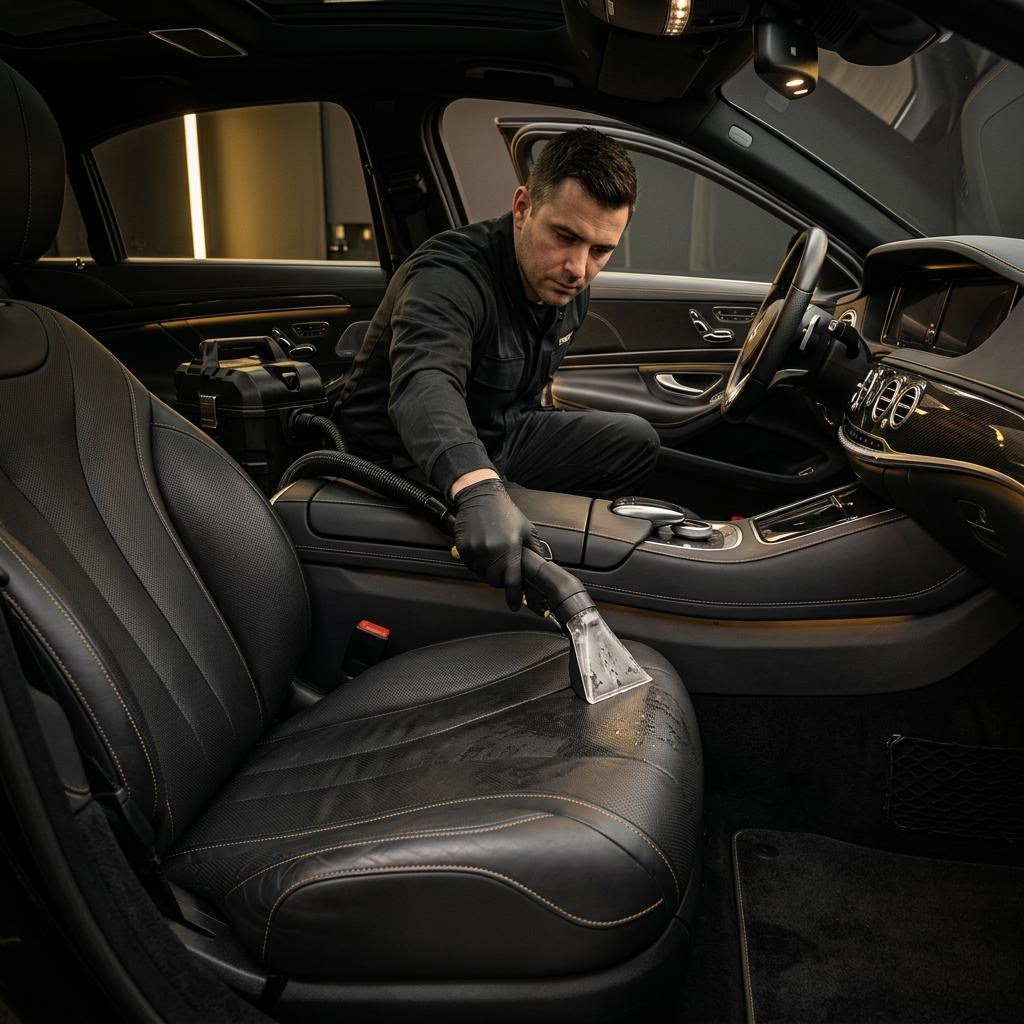
If sunscreen has been ground into the seats over a whole summer of beach trips, or the orange discolouration won't budge, it is time for a professional deep clean. Hot-water extraction flushes oils out of fabric and foam in a way household cloths cannot, and proper leather treatment safely lifts residue without damage.
A complete professional interior clean resets the entire cabin, so one clean seat doesn't stand out against the rest. And because we are a mobile detailing service across the Perth metro, we bring the extraction gear straight to your driveway — handy after a big beach season. If you want the whole car sorted, our full detail covers inside and out.
Don't Forget the Other Beach-Day Offenders
Sunscreen rarely travels alone. A typical Perth beach day also loads the car with:
- Sand, which works into seat seams, carpets and door pockets and grinds at fabric over time
- Salt water dripping off wet togs and towels onto seats and carpet
- Damp towels that, left in a hot boot, breed a musty smell within a day or two
Tackling all of this together in one interior clean is far more effective than chasing individual marks. A whole summer of beach trips builds up a surprising amount of grime, and it's usually the sand-and-salt combination, as much as the sunscreen, that leaves a cabin feeling gritty and tired.
Prevention for Next Beach Trip
- Keep a towel over the seats for the drive home
- Let sunscreen dry and absorb before getting in
- Wipe greasy hands before touching trim and the wheel
- Shake out towels and togs before they go in the car
- Deal with fresh marks quickly, before they set in the heat
Frequently Asked Questions
Why does sunscreen leave orange stains on my seats?
Certain UV filters, especially avobenzone, react with iron and minerals — including those in Perth's bore water — to form a rusty-orange stain. These are tougher to remove than a normal oily mark and sometimes need professional treatment.
Can I use degreaser on my car seats?
Use a mild degreaser or dish soap solution on cloth, applied to a cloth rather than the seat, and always test first. Avoid harsh degreasers on leather — use a dedicated leather cleaner instead to protect the finish.
Will sunscreen stains come out of leather?
Usually, yes, if treated properly with a leather-safe cleaner and conditioner. Fresh marks are easiest; long-set stains may need professional care. Never scrub or soak leather.
How do I stop sunscreen ruining my interior?
Let sunscreen absorb before getting in, wipe your hands, and lay a towel over the seats for the drive home. Fast action on any fresh marks stops them setting in Perth's heat.
Book a Beach-Season Interior Reset
If a summer of beach trips has left your seats greasy and marked, we can bring them back. Black Label Detailing is rated 4.8 stars from 61 Google reviews and brings professional interior cleaning to homes right across Perth. Book your interior clean online and reclaim a fresh, sunscreen-free cabin.